


The Time has Come for a New Economy of Inclusivity and Sustainability
Since the moment COVID-19 was declared a pandemic, the global economy has been on a turbulent journey towards a looming target. We do not know, until now, how long this journey will take and where it will land, but what can be inferred is that this current climate will have long-term consequences, especially for developing countries. Jordan will not be immune from it, as it has become clear that the growth model for the country has now changed.
In the stage of globalization, there was some success for small developing countries that showed flexibility and openness and achieved high growth rates by relying on exports, creating knowledge-based economies, and implementing strategies to boost local production. Today, this reality has changed drastically, with larger countries and economies having a clear edge as they can fall back on their reserves and assets. Such economies can generate demand and supply in order to achieve growth, but the great danger lies in the fact that the liquidity problem will malform into a financial insufficiency problem, resulting in increased unemployment, especially among poorer communities that have limited resilience to economic shocks. In my opinion, any solution to confront these challenges should be implemented in the stages below:
: This stage focuses on alleviating the pressures resulting from lockdowns and closures which, to date, have never previously occurred in major economies worldwide. In developing countries, the first stage should focus on the most vulnerable segments of the community.
: This stage begins with the reopening the economy without risking a second wave of infections, which is a major challenge that requires a delicate balance between public health and economic stability.
: This stage involves the introduction of incentives following the realisation of herd immunity or when a balance is struck between health and economics.
In the case of Jordan, I would like to address in detail the first and third stages. During the first stage, the response in the Kingdom was through a number of national and governmental initiatives and firm measures by the Central Bank of Jordan, which was quick to intervene by reducing interest rates and pumping more than JOD 1 billion into the banking system by reducing mandatory reserves and concluding repurchase agreements with deadlines of up to one year, in addition to an initiative that delivered much-needed support to small and medium enterprises (SMEs). The Central Bank further reinforced these measures with guarantees from the Loan Guarantee Corporation to ensure that liquidity does not remain trapped in the banking sector and that it finds its way into SMEs, which are considered the most vulnerable to economic instability. Meanwhile, on the financial front, the government took a number of measures, including postponing tax and non-tax liabilities for individuals and companies, in addition to some of the initiatives and symbiotic measures that it undertook through the Social Security Corporation.
During the third stage, response measures must rise to the challenge, and considerations related to the limited fiscal space available must not be allowed to hinder the government response to such an unprecedented crisis. The substantial demand gap left by this pandemic cannot be left to the private sector alone to fill it, especially in light of the unprecedented state of uncertainty facing our economic landscape. This means that the government must take the initiative and take a leading role in investment.
To enable the private sector to yield sustainable job opportunities and attract foreign investments, it is necessary to continue improving the competitiveness of the economy by removing bureaucratic obstacles, strengthening economic legislation, and providing tax and non-tax incentives to private sector within strong governing frameworks based on transparency and accountability. This will serve to enhance the credibility of the development process and restore trust in the state’s institutions. In the case the response mandates extenuating measures, such as the renegotiation of existing contracts and agreements, this should be implemented based on an approach that enshrines participatory decision-making and at values consistently higher than those originally pledged.
The government, especially during the third stage, should reorient the economy towards the local sectors that have been neglected in the past and were most impacted today, such as agriculture and food production, both of which are integral to long-term prosperity and to emergency response plans. It is also clear that technological advancements have the power to enhance productivity and Jordan must work toward harnessing them to provide improved and reimaged services across core sectors, including education, and the government must continue to lead with regards to investing in such technologies.
The government must significantly accelerate its efforts to establish a fund to subsidize sectors most affected by the pandemic using innovative investment tools and formulas specifically developed for this objective, whose responsibility is to determine the sectors that are eligible for subsidies and businesses that are operating on sound principles. At this point, it is also prudent for all of us to voice our support to the fund being established by the Central Bank for this purpose.
What is needed today goes far beyond 2008. We need to work to create a new economy that supports inclusiveness and sustainability, one that is founded on real, measurable and evidence-based financial models. Today we are more aware than ever that inclusiveness is the key to sustainability and prerequisite for long-term success. This means that we must restore focus to the values of social justice and to promote collaboration between government agencies and the private sector to overcome all obstacles.
Relying on market forces alone to achieve sustainable development and address economic challenges will not yield the desired results. This means that future development should focus on empowering communities, improving education, improving the efficiency of public spending, and providing protection and support to those who are entitled as an alternative to ad hoc support policies. We must also work toward expanding social safety nets and improving public services to achieve an economic model capable of withstanding future shocks and sustaining future generations.
The challenges we face today differ in nature and require new policies that take into account this new reality. We must not be prisoners of traditional policies that have prevailed for decades. Instead, we should examine how we can develop mechanisms of adaptation and modernisation in order to have a clearer vision of our future.
More news
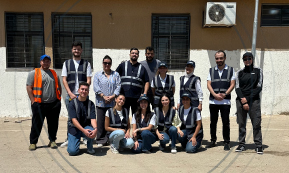
Capital Bank Employees Volunteer to Refurbish Ain Al-Basha Girls’ School in Partnership with “Sports for Charity”
A team of Capital Bank employees, in partnership with the “Sports for Charity” initiative, took part in a volunteer activity to refurbish Ain Al-Basha Girls’ School, helping create a more welcoming and inspiring learning environment for students ahead of the new academic year.

Capital Leasing Sponsors the Fourth Edition of GREEFIN Forum 2026
Capital Leasing, a subsidiary of Capital Bank Group, sponsored the fourth edition of GREEFIN Forum 2026, organized by the Association of Banks in Jordan

Capital Bank Launches New Housing Loan Campaign with Competitive Benefits
Capital Bank has launched a promotional campaign for housing loans, offering customers preferential benefits and competitive interest rates on both new housing loan financing and existing loan buyout programs. The campaign also includes a financing program specifically designed for Jordanian expatriates.